Maybe it's time to change our grain of Thought...

Practising What I Preach: A Small Grain First-Timer's Honest Review
The author details their first time, first-hand experience growing pearl millet and sorghum, off-season and using irrigation.
By Claire Matsika
6/3/20262 min read
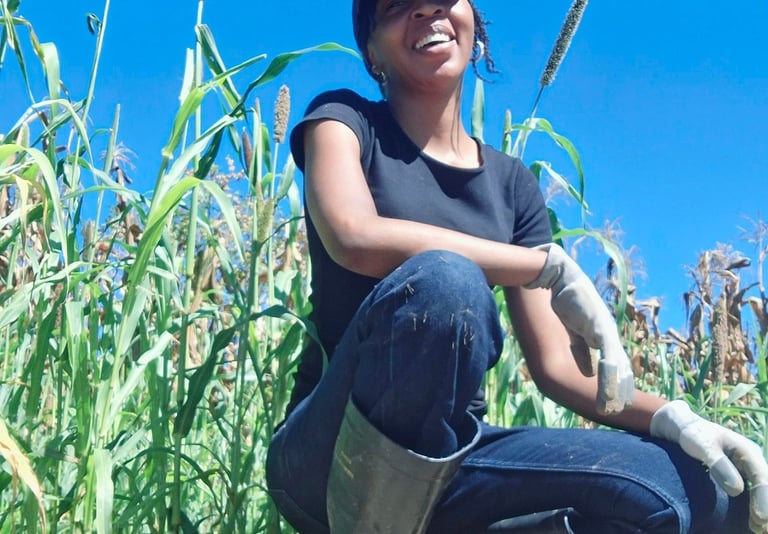
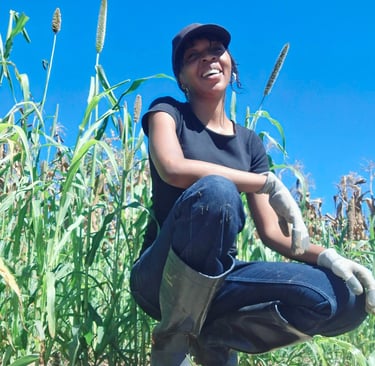
For a while now, I have been telling anyone who will listen that small grains (millet and sorghum) are the future of climate-resilient agriculture in Zimbabwe. But talk is cheap, so I decided to put my money where my mouth is and grow them myself, for the very first time.
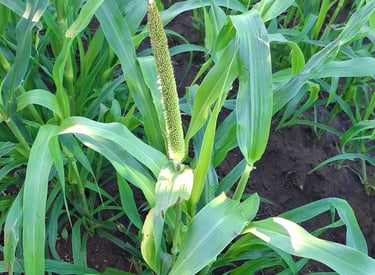
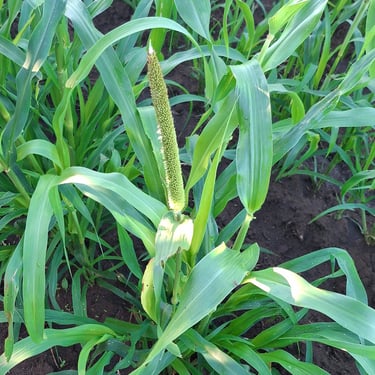
I chose pearl millet (Okashana variety) and sorghum (SV4 variety) and I grew them off-season using irrigation. The reasoning was deliberate as no rainfall assistance meant I would get a true picture of exactly how much water these crops actually need. I planted in February, and by early May I was already harvesting the millet (about 10 weeks later). I am currently harvesting the sorghum as I write this.
The water story alone is one worth telling. With maize, which I grew last year, I was watering three times a week without fail. With the millet and sorghum once a week was often enough and they didn't flinch. There was no wilting, no stress, no drama. The most I ever had to do was twice a week and only during the most critical points which are the early vegetative and flowering stages. That is a remarkable difference from my experiencewith maize and it genuinely changed how I think about irrigation farming.
The rest of the experience was equally refreshing. A single application of manure at planting, followed by a second at four weeks was more than enough. There was no need for inorganic fertiliser but I did however add a small amount of top dressing during grain filling just to be safe. When it comes to weeding, I weeded once. Just once. It's safe to say these crops basically took care of themselves, which coming from a maize background, felt almost suspicious. The only extra task I had to do that I never encountered with maize was thinning since small grains produce more tillers than maize. However more tillers means more yield, so that was a trade-off I gladly took.
Just in case you're not convinced of these crops hardiness yet, I also grew these crops in acidic soils of pH 5.6. This is far from ideal and yet they still thrived. That kind of resilience is not something you can fake.
Now, if I had to pick a favourite (and I do have one), it's pearl millet. It flowered by week six and handled water stress even better than the sorghum. The whole process felt almost effortless. For any farmer considering making the switch to small grains, or even just adding them to their rotation, pearl millet is where I would start.
As amazing as these crops were, I did face one challenge I didn't anticipate - birds. They flocked to the field during the grain-filling stage as if they had received a memo. They especially liked to visit very early in the morning. I tried a few things before landing on the most surprisingly effective solution, which was lining the field with old CDs. The flash and movement sent them off immediately. A low-tech, zero cost solution.
All in all, this was a 10/10 experience. Everything I have been saying about small grains turns out to be true, and then some. If you've been on the fence about growing small grains, consider this an honest, first-hand recommendation. Get to working with these crops. They will not disappoint!